CAA Trip to Sicily,
September 30 - October 9, 2026
10 Days of Art, Culture, History and Scenery,
At an Ideal Time to Visit
Greeks, Carthaginians and Normans
Sicily's eventful history has given it a rich cultural heritage. A wide variety of peoples have shaped the island's culture: Greeks and Carthaginians fought for supremacy here before the Romans conquered the island; later, Arabs and Normans came, followed by the Hohenstaufen dynasty, the French and the Spanish. This explains the rich spectrum of buildings and works of art, from early archaic temples to magnificent Norman cathedrals and Baroque churches.

OLD TOWN, NORMAN PALACE AND PALAZZO VALGUARNERA GANGI
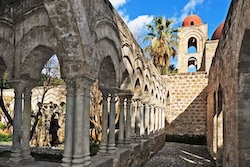 Crown of Constance. The tour continues to the Norman complex of the Monastery of San Giovanni degli Eremiti (photo). Passing through the most atmospheric of all the city's markets, the Ballaro Market, we will return to the Old Town and our hotel, or perhaps enjoy a leisurely lunch. In the afternoon, we will stroll to the Teatro Massimo, the Church of San Domenico and through the Vucciria district, whose once dilapidated houses have been undergoing gradual restoration for several years. We will
  then continue to Piazza Marina and a park with centuries-old, bizarre magnolia trees. Return via San Francesco and visit the Oratory with its copy of a work by Caravaggio, stolen in 1969 and considered lost ever since. The Oratory's stucco work is renowned for this art form in 18th-century Palermo. Then we will visit the still privately owned Palazzo Valguarnera Gangi, where Luchino Visconti shot the most famous ballroom scehes of the film The Leopard, with Burt Lancaster. (photo). Dinner follows.
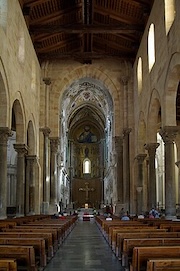 In the morning, drive east along the coastal highway to Cefalu. The town lies between an imposing cliff face and the sea and is dominated by its Norman cathedral (photo). Stroll along the seafront and through the charming streets to the cathedral. Lunch together at a lovely seaside restaurant. In the afternoon, return to Palermo and visit the Jesuit church of Casa Professa, one of the most important sacred buildings of the Sicilian Baroque. The church is a masterpiece of pietra dura (stone) work combined with stucco decoration. We may have a speaker at dinner – an American ex-pat who has lived in Italy since the mid-1970s and Palermo for more than 20 years. He is an industrial designer who was mentored by some of the tops in the field and has worked on various planning, sustainability and design projects with the EU and local groups.
DAY FOUR Saturday, October 3rd
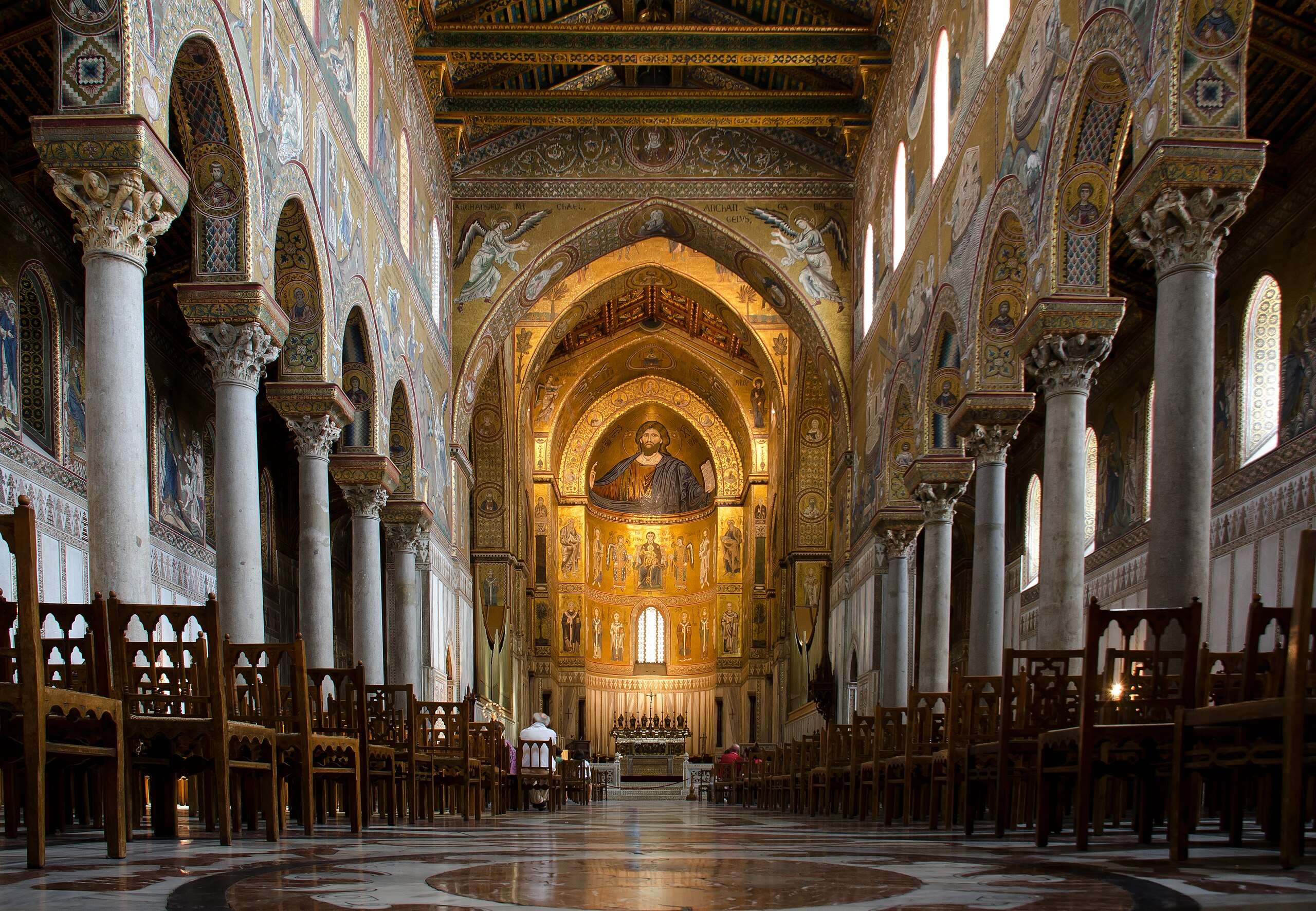 In the morning, a short drive takes us to Monreale, located south of the city, where we will visit the cathedral (photo), completely covered in golden mosaics, and the cloister with its richly decorated columns and capitals. We then continue west through charming countryside and a picturesque gorge, passing through Piana degli Albanesi to reach Segesta. Piana degli Albanesi is a world unto itself within Sicily: its inhabitants settled here from Albania during the Turkish invasion of the 17th century and still live with their own traditions and language. In Segesta, we will visit the Doric Temple of the Elymians, peacefully nestled in the green landscape, and ascend to the Greek amphitheater, which offers a wonderful view of the meadows, green at this time of year, and all the way to the sea. We then continue to our hotel near Marsala, where you will have time to relax on the beautiful hotel grounds before dinner.
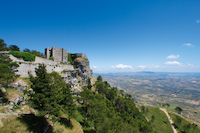 In the morning, drive to nearby Trapani and take the cable car up to Erice, the proud city of the Elymians, 750 meters higher. The view (photo) during the ascent stretches from Trapani below to the nature reserve and lagoon area near Mozia, all the way to the Egadi Islands: Favignana, Levanzo and, far to the west, Marettimo. Walk from the castle through the narrow streets of the old town to the cathedral. In the afternoon, visit the small Archaeological Museum of Marsala, which houses the remains of a Punic ship and other interesting finds. Visit a historic wine cellar where traditional Marsala wine is produced. We then continue to our hotel near Marsala, where you will have time to relax on the beautiful hotel grounds or by the pool before dinner.
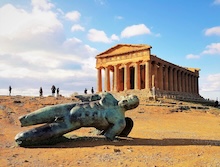 and unreconstructed enormous column drums of the temples is particularly impressive, offering insight into the construction techniques of antiquity. In the afternoon, we continues along a scenic route via Menfi and Sciacca to Agrigento. Pindar described Agrigento in the 5th century BC as "the most beautiful city of mortals", and today it enjoys immortal fame thanks to the magnificent temple complexes of Concordia, Hera, Heracles, Zeus and the Dioscuri. (photo)
 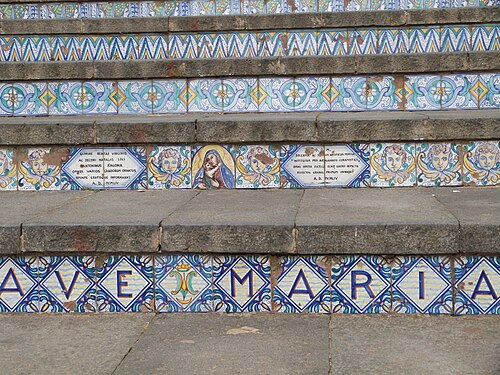 In the morning, drive along the scenic coastal road to Gela and inland to Caltagirone, Sicily's historic center of ceramic production. Walk from the city's highest point (weather permitting, with a view of the snow-capped Mount Etna) to the ceramic-decorated "Thousand Steps" (photo: details of 103rd step). Continue into the Ereic Mountains and to the picturesque hilltop town of Piazza Armerina, where we will have lunch.
 depictions are those of the "Bikini Girls" (photo).
  Later , we follow the Via Etnea via Nicolosi up to Mount Etna (photo). A symbol of Sicily across the world, it's the largest active volcano in Europe, as well as one of the highest in the world, and has been on the UNESCO World Heritage List since 2013. We drive up to the Rifugio Sapienza, situated at an altitude of 1800 meters, with a view into a secondary crater. The journey continues along the eastern flank of Mount Etna, passing Zafferano Etnea with its impressive 1992 lava flow, before following the scenic coastal highway with its sea views to Taormina. A cable car takes us up to the town, followed by a stroll through charming streets and along the elegant Corso Umberto. From the Roman-Hellenistic theater, there is a spectacular view of the sea, the coastline and Mount Etna.
We return to the hotel (and dinner) via Acitrezza, home to the Cyclopean Rocks, which, according to legend, the giant Polyphemus hurled at Odysseus.
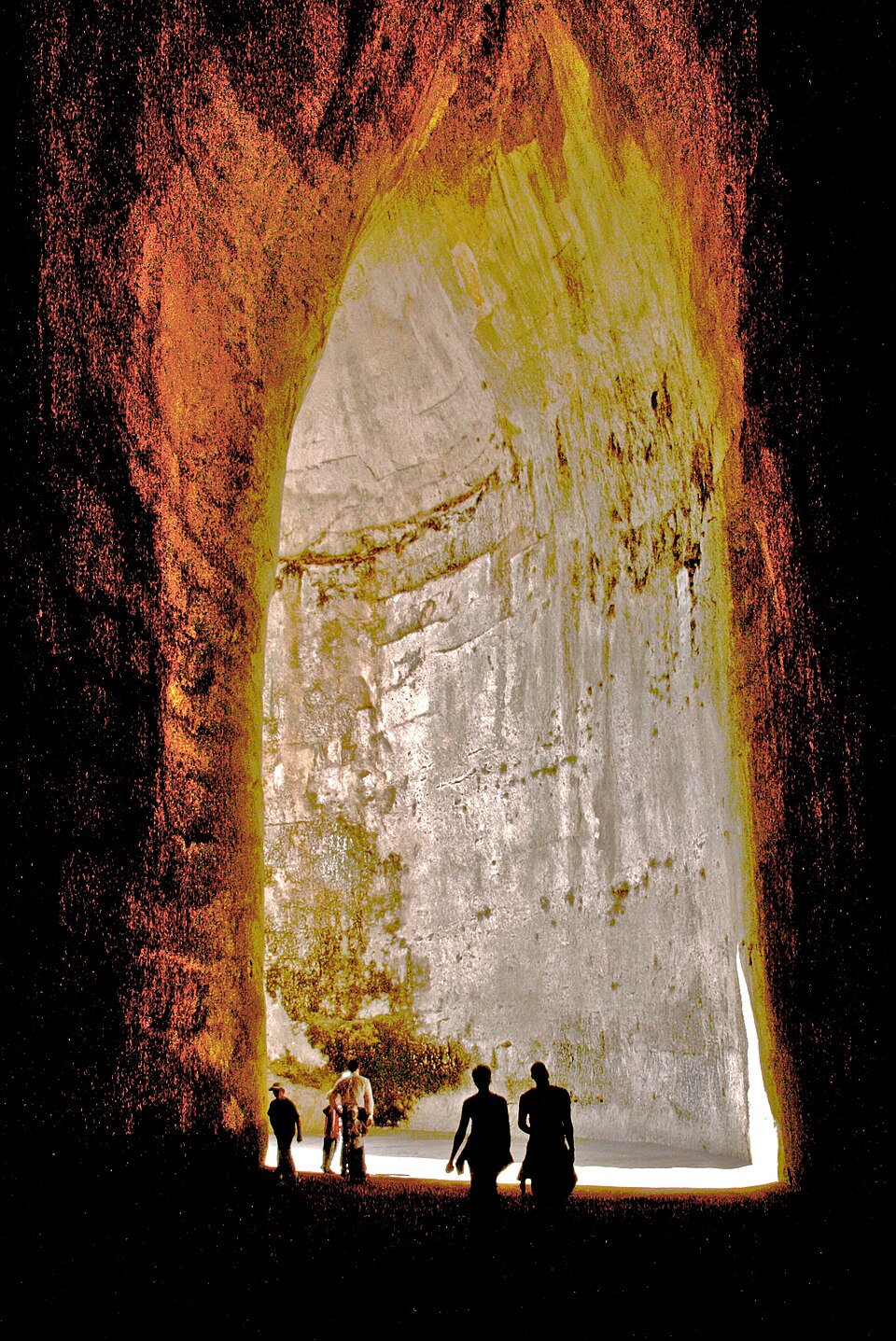 The morning is free for a final shopping trip through the town, perhaps for the typical candied fruits or Sicilian cannoli. Around midday, Count Biscari will welcome us and give us a tour of his historic palazzo. Over a glass of Prosecco and some appetizers in his palazzo, we will enjoy the atmosphere of Sicily and its hospitality. In the afternoon, we drive south along the coast, past the Gulf of Augusta and on to Syracuse. We visit the ancient Greek theater and see the legendary "Ear of Dionysius" (photo), a limestone cave carved out of the Temenites Hill. We stroll through the old town, located on the Ortyga peninsula, with its narrow, whitewashed streets and the cathedral, which was incorporated into the ancient Temple of Athena. As darkness falls, the main square, with its illuminated facades, becomes an unforgettable experience!
 - October is an ideal time to visit Sicily, offering pleasant, warm weather, blooming landscapes and fewer crowds.
- Terrain is similar to that of our prior trips in France, Portugal and Puglia: modest hills, lots of cobblestones. You should be able to walk moderate lengths to participate happily and safely on the trip.
Hotels, Cost, Registration, Etc.
► transfers and excursions in comfortable tour coach with AC /heating, with bottled water supplied on the coach
► 9 overnight stays in 4-star superior to 5-star hotels
► 17 dinners and lunches (or light lunches) in selected restaurants, with wine, beer, soda, water, coffee/tea; breakfast in the hotel
► all entrance fees
► airfares and transfers to/from Palermo or Catania from/to airport or train station
► housekeeping gratuities
► cocktails, wine other than that served with meals
CANCELLATION/REFUNDS
Ken Jablon.
WOLFGANG (WOLF) FRIEDL