
Life After Chase: Valerie Rainford
Entrepreneur, Still Strategic About Talent
By Kristi Irwin-Newberry
A conversation with Kristi Irwin-Newberry, who retired from JPMorganChase in May 2022, where her various roles included Executive Director, Head of U.S. Persons Abroad, and, at JP Morgan, Executive Director in Global Quality Programs and the Technical Solutions Group and VP in Quality and Training. Since 2022 Irwin-Newberry has done contract work for the subject of this article, and founded her own firm, KIN Strategic Consulting LLC.
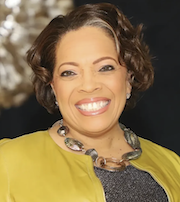 Valerie Rainford has built a career around people, leadership and opportunity.
A former Managing Director at JPMorganChase, Valerie brings more than 30 years of experience building businesses, shaping strategy and developing leaders. Throughout her career, she has seen firsthand that exceptional talent is at the core of strong business performance. Today, she is Founder and CEO of Elloree Talent Strategies, the firm she launched after Chase to help other organizations make better decisions about their people and develop the leaders they need for the future.
Her work has evolved, particularly as companies navigate a very different environment around talent, equity and inclusion. But much of what guides Valerie today can be traced back to lessons she learned at Chase and throughout her career.
We caught up with Valerie to talk about what she took from her years at the firm, why she became an entrepreneur and what she is learning in this next chapter.
Tell us a little about your time at Chase and what you’re doing today.
My years at JPMorganChase (including 12 at JP Morgan) were an incredibly important part of my career. I had the opportunity to serve as a Managing Director, work closely with senior leaders and be part of a company that took talent and leadership very seriously. I also had the opportunity to help drive the firm’s Advancing Black Leaders strategy, which was an important part of my Chase experience.
One thing that stayed with me is that talent was never just an HR conversation. That reinforced something I had seen throughout my career: Strong businesses are built with exceptional talent at the core. The people you hire, the leaders you develop, the opportunities you give people and the pipeline you build all have an impact on the business.
Today, I’m Founder and CEO of Elloree Talent Strategies. We work with organizations on talent strategy, leadership development, executive coaching and talent diagnostics. The work has grown and changed over the years, but at its core, we help companies get clearer about their talent and where the gaps are to make better people decisions.
What did you take from Chase that helped you build what came next?
A lot!
Clarity is probably at the top of the list. Chase is a big, complex organization, and I learned that leaders have to be able to cut through that complexity. I honed that superpower at Chase: Focus on what matters. What are we trying to accomplish? Who needs to do what? You can have a great strategy, but if people don’t understand it or know what it means for them, you’re not going to get very far.
I also learned to connect talent decisions to business outcomes. That perspective has stayed with me.
I had seen what was possible when an organization was really disciplined about talent. When I started Elloree, I knew there were other companies wrestling with many of the same questions, and I thought we could help.
Over the course of my career, I’ve built businesses and strategies in very different environments, and one thing has been consistent: You can have a great strategy, but you need the right people to execute it. That has been a big part of how I’ve built Elloree.
I think about our own business the same way I advise our clients to think about theirs. What are we trying to build? What capabilities do we need? Do we have the right people? Where do we invest now so we’re ready for what comes next?
And I learned something else at Chase that has been especially useful: Don’t make every decision based on what the market looks like today.
There are times when the market is down and the instinct is to stop investing. I’ve taken a different approach with Elloree, learned during my time at Chase. We’ve continued to invest because I believe the tide will change. When it does, we will be ready. We stay ready.
What made you decide to become an entrepreneur?
I am fortunate that throughout my career, I had a lot of opportunity to be entrepreneurial. Build new businesses. Transform broken businesses. Lead large, complex and creative programs – all of which allowed me to be creative and build.
There came a time in my career when I was ready to build my own thing, and I had confidence that I could do it. I knew I could be a CEO—something I didn’t think staying in corporate America would afford me.
So I stepped out on faith, knowing my focus would be talent strategy.
I had spent years seeing how much difference good talent decisions could make. I also saw how hard it could be for organizations to get those decisions right.
I wanted to take what I had learned and use it more broadly to benefit more organizations.
Starting Elloree gave me the opportunity to do that. It also gave me the freedom to work with different organizations, industries and leaders. I get to see a lot, and I learn from every engagement.
What I didn’t fully appreciate when I started was how much I would draw on all of that experience—setting a direction, building a strong team, making investment decisions, staying close to clients and continuing to build when the market gets difficult. It has reinforced for me that talent really is at the center of a strong business. I believe that for our clients, and I’ve had to live it as a CEO myself.
There are certainly easier days than others when you own a business! But I’m proud of what we’ve built and excited about where we’re going.
This has been a difficult time for diversity and equity work. What are you seeing, and how has Elloree responded?
It has been difficult. There’s no point pretending otherwise.
Companies are reassessing priorities. Language has changed. Budgets have changed. Some organizations have pulled back from work they were doing a few years ago.
But I don’t think the underlying talent questions have gone away.
Companies still need great people. They still need to develop leaders. They need to focus on giving their people opportunities to grow and whether their succession plans are producing the leaders they’ll need in the future to sustain their businesses. They need good information so they can make good decisions about talent.
So for us, the work continues, even though the conversation has evolved.
We talk about equity in the context of talent and business outcomes. Who has access to opportunity? Are we developing the best people? Where are we losing talent? What does the data tell us? Are leaders making consistent, thoughtful, fair decisions that create opportunity for all?
Those questions matter regardless of what terminology is being used at the moment.
I also think this environment is a real test of leadership. You have to pay attention to what is happening around you, but you can’t react to every headline. You have to know what your business needs and stay focused on that.
What do you think leaders need most right now?
Judgment.
There is so much information coming at leaders, and there are rarely perfect answers. Leaders have to be able to separate what matters from the noise, make decisions with the information they have and adjust when circumstances change.
They also need clarity. People want to know where they’re going and what is expected of them. In uncertain environments, that becomes even more important.
And I think leaders have to resist becoming too short-term focused. You have to manage what is in front of you, of course, but you’re also responsible for building what the business will need next. That includes talent. Who are you developing? What capabilities will you need? Are you building the leadership pipeline for where the business is going, not just where it is today?
And leaders have to understand people. You can have the best strategy in the world, but people have to execute it. Strategy doesn’t execute itself. People do.
That’s something I continue to see in my coaching work. I spend a lot of time with senior leaders, and I learn as much from those conversations as I hope they learn from me.
What advice would you give Chase alumni who are thinking about their own next chapter?
Be intentional.
Careers don’t always go exactly where we think they will. Mine certainly had turns I couldn’t have predicted. But you can be intentional about what you want to learn, the kind of work you want to do and the impact you want to have.
Know your value, too. Understand what you’re good at, but go one step further and understand why it matters. What difference do you make?
And invest in relationships.
Some of the relationships I built at Chase have lasted for years. A network isn’t something you suddenly build when you need a job or a client. Those relationships matter because you’ve invested in them over time.
Finally, keep learning. I still do. I learn from the leaders I advise, the clients we work with, my team and the people around me.
I don’t think there’s ever a point when you get to say, “Okay, I know everything I need to know.”
There is always a next chapter.